Is there a single correct amount?
No. Daily water needs vary with body size, sex, activity, climate, diet, and health. Two adults of the same age can have targets that differ by more than a litre. This is why fixed rules like "eight glasses" or "two litres for everyone" are starting points at best, not precise prescriptions.
The useful question is not "what is the number" but "what is my number, and am I close to it most days."
What the official guidelines say
Two reference bodies set the most widely cited figures. The European Food Safety Authority (EFSA, 2010) gives an adequate total water intake of about 2.0 litres per day for women and 2.5 litres for men. The U.S. Institute of Medicine (IOM, 2004) sets higher totals — about 2.7 litres for women and 3.7 litres for men.
Two points matter. First, both figures are total water, including the water in food, which typically supplies 20–30% of intake — so the amount from drinks alone is lower than the headline number. Second, both are population averages for healthy adults in temperate conditions, not targets tailored to one person.
How much water by body weight
A common starting estimate scales with body weight: roughly 33 ml per kilogram per day. For a 70 kg adult that is about 2.3 litres; for a 90 kg adult, about 3.0 litres. This is the baseline AquaTrack uses before adjusting for the factors that actually move the number, and you can see the full method on the methodology page.
Body weight is a better anchor than a flat "two litres" because a larger body stores and loses more water. But weight alone is still only a starting point.
How activity, climate, and exercise change your target
Three factors push the number up:
- Activity level. A physically demanding day adds fluid loss through sweat and breathing. AquaTrack adds a fixed amount on top of the weight-based baseline rather than multiplying it.
- Climate and heat. Hot or humid conditions raise sweat loss, so the target scales up accordingly.
- Exercise. Only the minutes you train above your normal baseline add extra fluid — a short walk does not, a long run does.
A target that reflects all three is closer to your real need than any single fixed figure.
It's not only about water
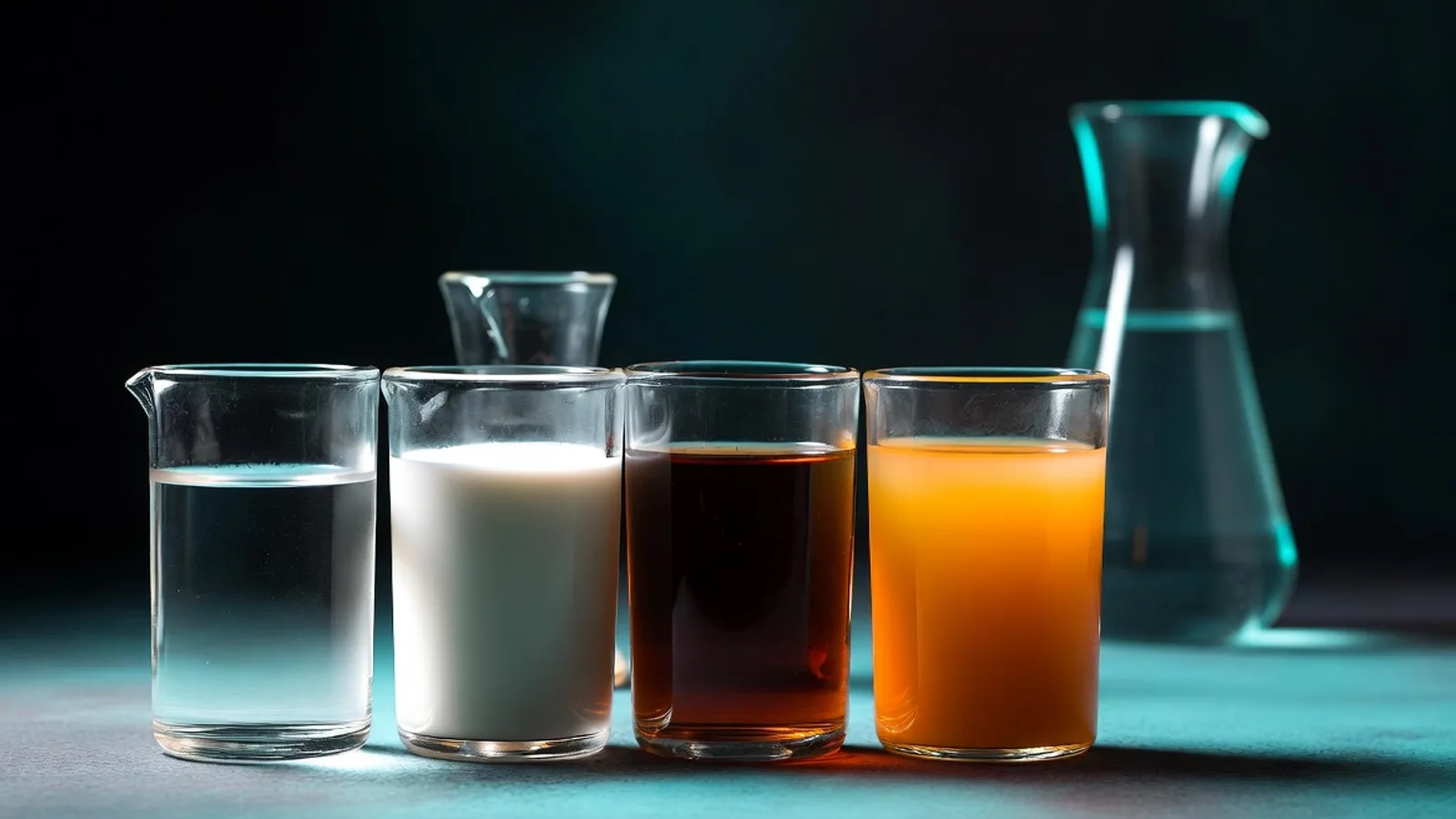
What you drink matters less than people assume. Most everyday drinks — coffee, tea, juice, soda — hydrate about as well as plain water at normal amounts, and milk slightly better. This is captured by the beverage hydration index: still water sits at 1.00, and almost everything common lands near it. So tea and coffee count toward your daily total; they do not work against it.
How to tell if you're drinking enough
You usually do not need to count millilitres to know whether you are on track. Pale-yellow urine through the day is a reasonable sign of adequate hydration; consistently dark urine suggests you could drink more. Thirst is a normal early signal, not proof you are already dehydrated. For most healthy adults, drinking to thirst alongside a sensible daily target covers it.